
Beginner Driver Education · Vehicle Handling
Understanding Traction in Vehicle Handling
Driviology Road Safety Education Team
What this actually means for you
Traction is the tires' grip on the road, and it is a budget you spend every time you brake, accelerate, or turn. Dry pavement gives you a generous budget.
Traction in Vehicle Handling | Key Factors and Insights
Traction is the tires’ ability to grip the road.
Traction is a cause of friction between the road and the tires. Without any friction or traction, the tires would slide on the road.
Reduced traction will significantly reduce the car's control and the stopping distance when applying the brake.
Several factors affect traction;
The material of the road:
Generally, a rough, textured road provides more traction than a smoother road. Moreover, well-maintained asphalt roads provide sufficient traction.
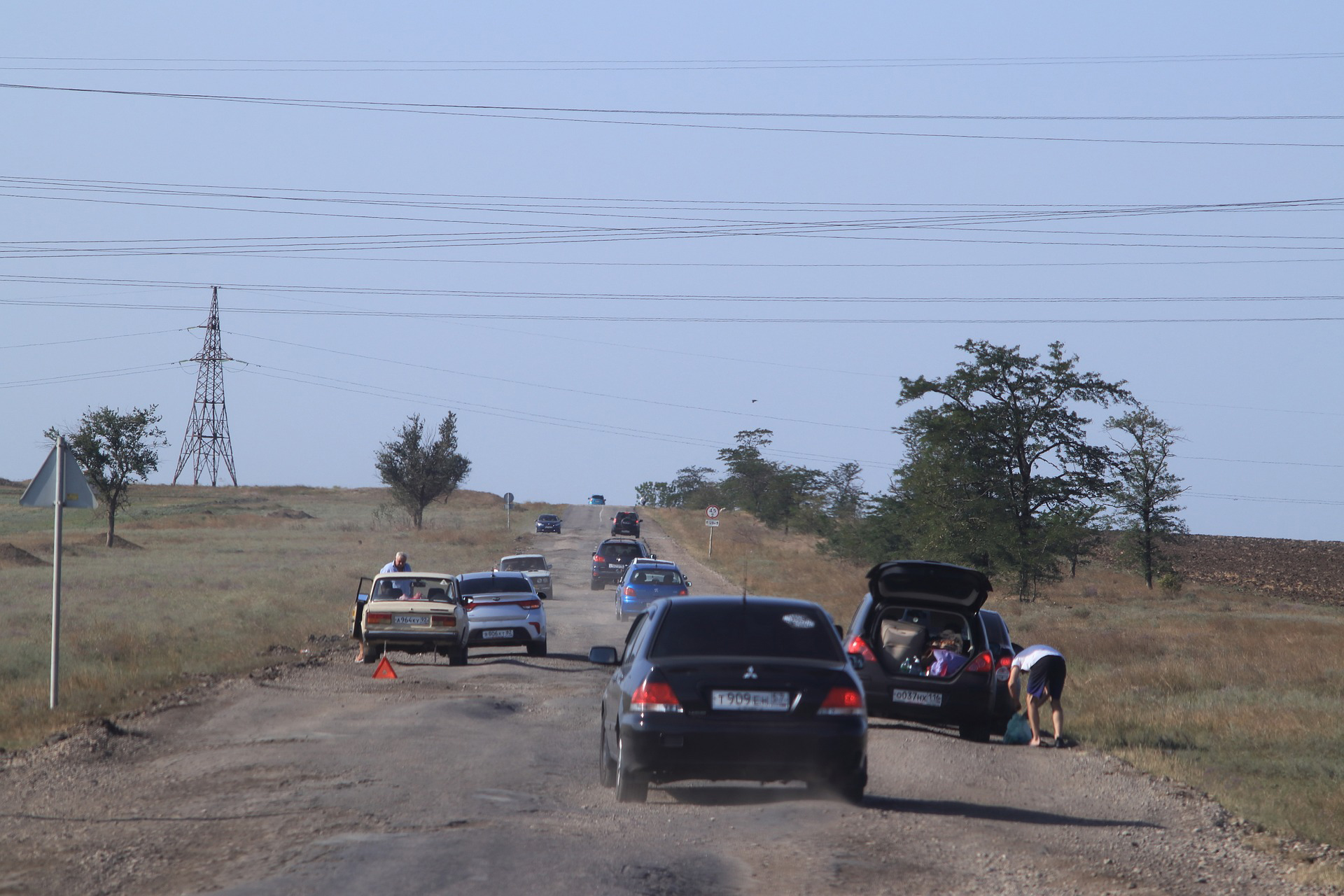
Rural roads are often uneven or contain loose material, such as gravel, that is not appropriately maintained. These roads generally provide less traction, and the driver should proceed cautiously.
The condition of the road:
Traction decreases when the road is smooth, wet, or slick due to rain, mud, snow, or ice. This reduced traction will significantly reduce stopping distance.
The condition of the tires:
Tires have specific design patterns to maximize traction. The amount of tread on the tires corresponds to the amount of traction. Worn-out tires have much less tread; a good driver will ensure they are changed.
Weight of the vehicle:
A heavier vehicle is bound to have more traction than a lighter vehicle. However, the car may slip on very loose ground due to its excessive weight.
Traction control system:
Almost all cars in this era have built-in Traction Control, which controls how the vehicle responds to poor traction conditions.
These systems control the vehicle’s acceleration and braking to prevent the wheels from spinning with reduced traction.
| Natural | Definition |
|---|---|
| Centrifugal Force | Force that makes objects move outwards when they are spinning around something or travelling in a curve. |
| Friction | Force that resists the sliding or rolling of one solid object over another. |
| Gravity | Gravity is the force that attracts all objects toward the Earth's center. |
| Inertia | Inertia is the force that causes something moving to tend to continue moving. |
| Kinetic Energy | Kinetic energy (KE) of an object is the energy that it possesses due to its motion. |
| Momentum | Momentum is defined as the amount of motion occurring in something that is moving. |
Using this on Ontario roads — and on your road test
Ontario drivers feel traction change within a single trip: dry highway, then a wet off-ramp, then a slushy side street. The habits that respect traction are simple — slow down before the turn, not in it; brake and accelerate in a straight line when grip is low; keep tires in good condition with proper pressure.
Questions drivers ask us
What is traction in simple terms?
Traction is the grip between your tires and the road. It is what allows the car to accelerate, brake, and turn without sliding.
What reduces traction the most?
Water, snow, and ice on the road; worn or underinflated tires; and speed. The faster you go and the worse the surface, the less grip you have to work with.
How do I drive when traction is low?
Slow down earlier, brake and accelerate gently and in a straight line where possible, steer smoothly, and leave much bigger gaps.